Your AI agent isn't ignoring your rules. It's drowning in them.
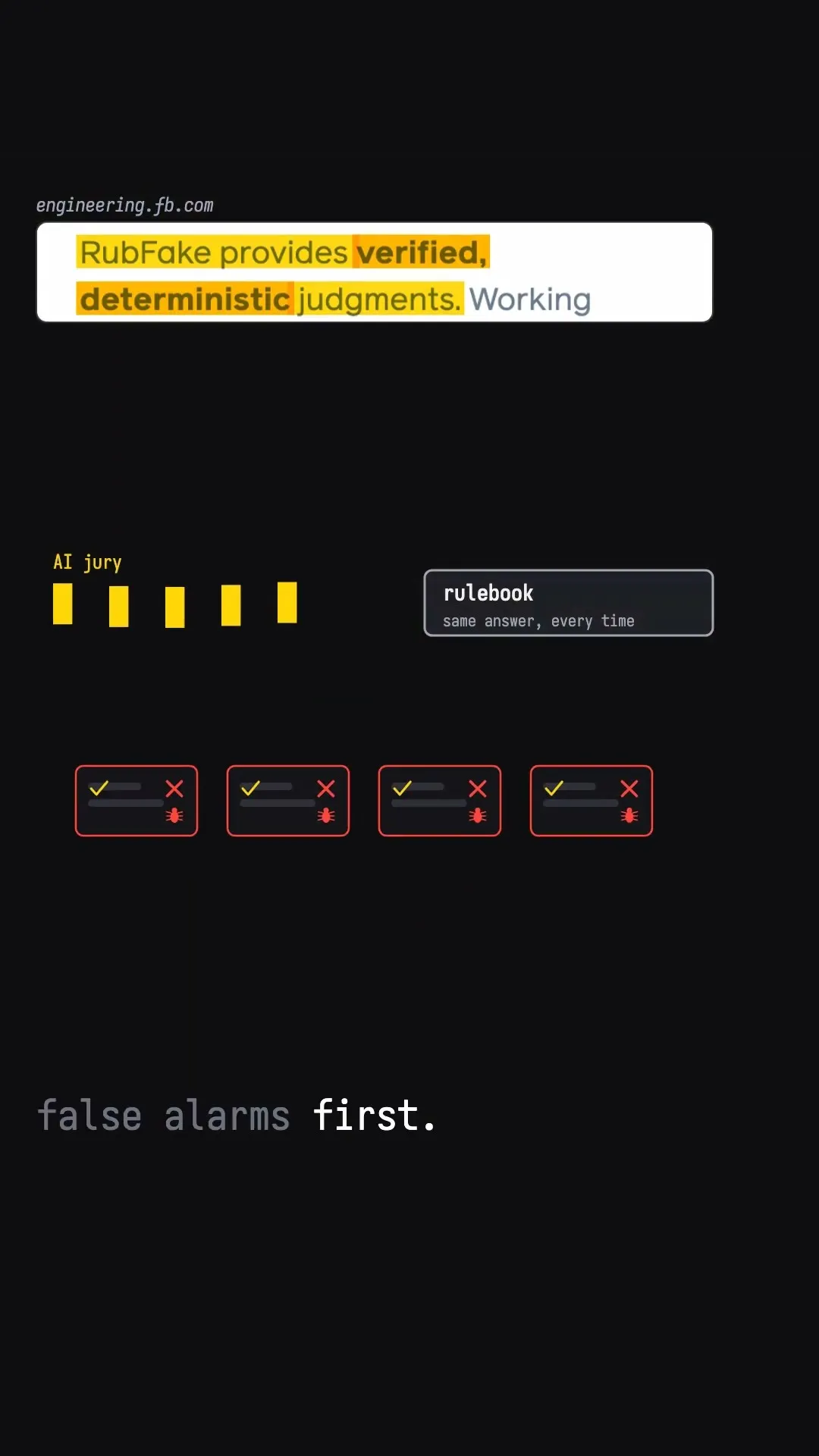
Meta gave one AI agent everything it needed to know, and it started making things up. Their fix: split the job into 14 specialists under a deliberately "dumb" router that does zero domain work. Without hand-written prompts, success went from 10–20% (single agent) to ~70%, and config prep from days to under an hour.
Source: "The Thin Orchestrator: How We Made Our AI Agents More Reliable by Giving the Router Less to Do", Engineering at Meta, Oct 19, 2026 (Plawan Rath, Akhil Jindal, Ashwini Verma) https://engineering.fb.com/2026/10/19/ml-applications/thin-orchestrator-ai-agent-architecture/
The AGENTS.md rules, the user_id example and the prompt counter are dramatizations; every number on screen is Meta's.
How long is your AGENTS.md?
Transcript
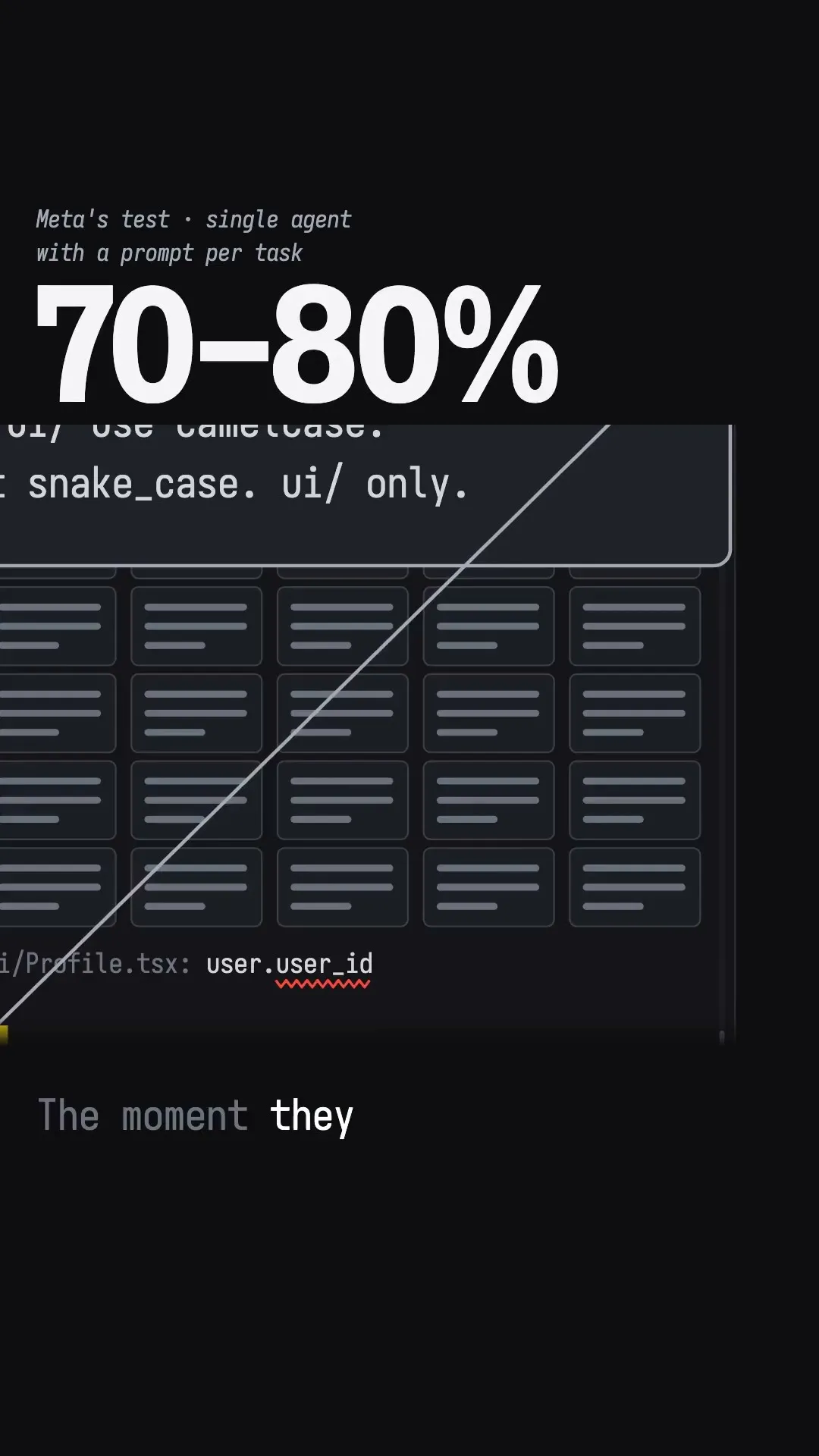
Your agent isn't ignoring your rules. It's drowning in them. Meta's agent drowned, too. They wrote a whole article about it. They built one agent that knew everything. In demos, it worked. In production, it started making things up. Not too little knowledge, too much. One system's rules leaked into the next. Sound familiar? So, you babysit it. A custom prompt for every task. Meta tried it. Up to 80%. The moment they stopped babysitting, 10 to 20. It only works while you hold its hand. So, Meta did the opposite. They split the job. 14 specialists, one domain each. But, who runs them? A router. 1,300 lines, zero domain work. The twist, it's dumb on purpose. Seven steps, only one thinks. Days of work, under an hour. And the babysitting? Gone. 70% no hand-holding. The most important part does the least work. Next time your agent breaks a rule, don't give it another one. Split the job. Because…